Lead Capture Funnel: How It Works and How to Build One Step by Step
A lead capture funnel is the point where interest turns into something tangible. It's not the full customer journey and it's not about selling right away. It's the moment someone decides an offer is worth their contact information — and actually submits it.
This is where confusion usually starts. Lead capture is often treated as the same thing as lead generation, but they solve different problems. Lead generation brings people in. Lead capture determines whether that traffic becomes actionable. Landing pages, lead magnets, forms, thank you pages, and follow-up automation all exist to support that single conversion moment.
When this part of the sales funnel is unclear or poorly built, even strong traffic and good content fail to convert leads. When it's structured correctly, anonymous visitors become identified contacts - and everything that comes after has something real to work with.
What Is a Lead Capture Funnel and Why It Matters
A lead capture funnel is how you turn anonymous browsers into contacts you can actually follow up with.
Someone lands on your page. Sees an offer. Decides it's worth their email. Fills out a form. Gets what you promised. Simple transaction.
Here's where people get confused. They use "lead capture" and "lead generation" like they mean the same thing. They don't.
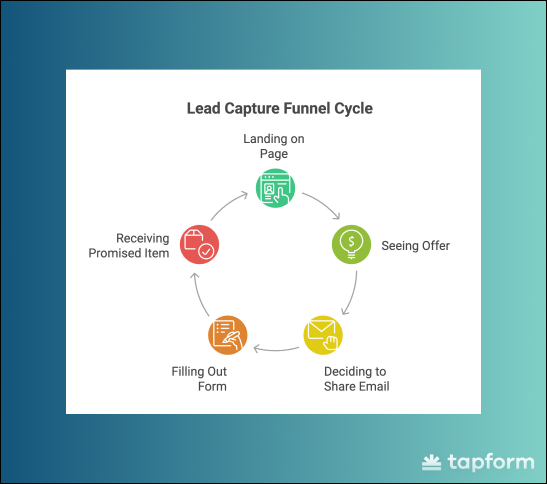
Lead Capture vs. Lead Generation: What's the Difference?
Lead generation funnel = your entire system. Someone sees your ad, reads your blog, browses your site, joins your email list, eventually buys. That's the full journey from stranger to potential customer to loyal customer.
Lead capture funnel = one specific moment in that journey. When someone trades their email for something you're offering. The landing page. The form. The download. That conversion point.
Think of it like fishing. Lead generation is everything - choosing where to fish, what bait to use, how to reel them in, cleaning the catch. Lead capture is just the moment the hook catches.
You need both. Lead generation brings people to your site through Google Ads, blog posts, social content.
Lead capture is the mechanism that actually collects their information and helps you capture leads efficiently. Then lead generation takes over again with email sequences that turn contacts into customers.
Can't generate leads without capturing them first. Can't make capturing work without the full generation system around it.
What Does a Lead Capture Funnel Typically Consist Of?
Six pieces make this work:
Traffic sources — how people find you. Could be paid ads, organic search, social media, email campaigns. Part of your bigger lead generation strategy.
Landing page — single-purpose page focused on one thing: getting form submissions. No header menu. No blog sidebar. Just the offer and the form.
Lead magnet — what you're trading. Template, calculator, discount code, free trial. Something valuable enough that giving an email address feels fair.
Lead capture form — where the capture actually happens. Two fields or ten fields depending on what you need and where they are in your funnel.
Thank you page — confirms they're in and delivers what you promised immediately. Not tomorrow. Right now.
Skip any piece and conversion rates drop. I've seen companies get thousands of visitors to landing pages with weak offers and convert under 2%. Same traffic with a better offer hit 35%.
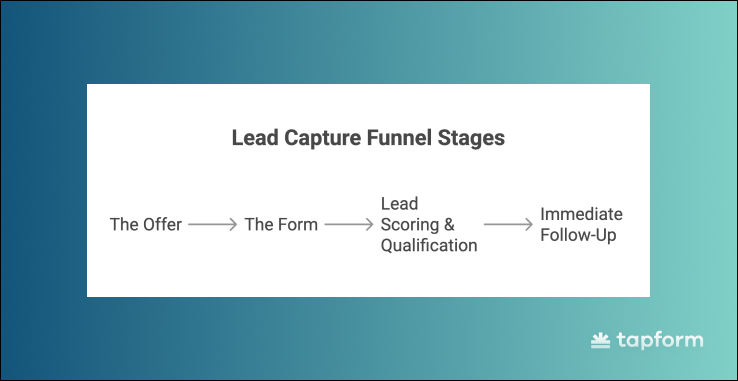
Key Stages of a Lead Capture Funnel
Getting People There (Traffic & Attraction)
Before you can capture anyone, they need to land on your page. Not your homepage — a dedicated landing page built specifically for conversion.
This traffic comes from your broader marketing. Blog posts ranking on Google. LinkedIn ads targeting your ideal customer profile. Email campaigns to existing contacts. Content marketing that answers questions your audience is actually asking.
Example: You write a blog post about reducing cart abandonment. That post links to a landing page offering a "Cart Recovery Email Template Pack." Someone reading that post is already thinking about the problem. The template solves it immediately. That's how you drive the right traffic to your capture point.
The Offer (Lead Magnet)
What are you giving them in exchange for their email?
Generic "Ultimate Guide to Marketing" ebooks don't work anymore. Too broad. Too much homework. Nobody has time.
What does work: solve one specific problem right now. ROI calculator they can use in five minutes. Email template they can customize today. Checklist they can run through this afternoon.
Good lead magnets convert 40-60% of people who land on your page. If you're under 20%, something's wrong. Either your traffic doesn't match your offer or your offer isn't compelling enough.
The Form (Capture Mechanism)
This is where anonymous becomes identified.
Short form asking for name and email? You'll get more submissions but some will be low quality. Longer form asking for company size, budget, current tools? Fewer submissions but better qualified leads.
Which one depends on which stage of funnel people are in. Someone downloading a beginner guide at the top of your funnel? Keep it short. Someone requesting a demo after visiting your pricing page three times? You can ask more questions.
Some companies use conversational forms - chatbots that ask one question at a time instead of showing a long form. Converts about 20% better than traditional forms because it feels like a conversation, not data entry.
Lead Scoring & Qualification
Form submitted. Now what?
Most companies immediately score that lead. Downloaded the pricing guide? 10 points. Works at a company with 50+ employees? 15 points. Visited your site five times this month? 20 points.
Hit a certain score and sales gets notified automatically. Below that threshold and the lead goes into nurture sequences.
This scoring determines whether someone gets a personal email from your sales team tomorrow or enters a six-week automated sequence.
Immediate Follow-Up
First five minutes after someone fills out your form matter more than anything else.
They should land on a thank you page that delivers what you promised immediately. Not "check your email in 24 hours." Now. Download link right there. Discount code visible. Access granted.
Then an email should arrive within minutes confirming everything and setting expectations for what happens next.
I've tested this repeatedly. Companies that deliver within five minutes see 30-40% better engagement than companies that wait an hour. Wait a day and you've lost them.
How the Full Customer Journey Works
Your lead capture funnel sits inside your lead generation funnel. Here's how people move through the stages:
Awareness (top of funnel) — Someone discovers you exist. Sees your ad. Finds your blog post on Google. Clicks your LinkedIn article. They have a problem but don't know you yet.
Interest (still top of funnel) — They're evaluating you. Reading multiple articles. Watching your demo video. Checking if you actually understand their problem. This is where you present your lead magnet naturally within content to build trust.
Desire (middle of funnel) — They land on your lead capture page and decide if your offer is worth it. Your headline needs to be clear. Your benefits need to be specific. Your form needs to be simple. This is the capture moment.
Action (bottom of funnel) — They fill out your form. Submit. Anonymous visitor becomes identified contact. You have their information and permission to follow up.
Conversion (bottom of funnel) — After capture, your email sequences take over. Educational content. Case studies. Product information. Moving them from contact to customer over time.
Defining Your Target Audience
Broad targeting gets broad results. "Small business owners" could mean anything from a solo consultant to a 50-person agency.
Get specific. "Marketing managers at B2B SaaS companies with 20-100 employees struggling to generate qualified demo requests from paid ads."
That specificity lets you create laser-focused offers. Your lead magnet can directly address demo request quality. Your landing page copy speaks to their exact situation. Your form asks questions that help qualify them properly.
Look at your existing customers. Which ones convert fastest and stay longest? That's your ideal customer profile. Build a lead generation funnel to attract more of them.
Types of Lead Magnets That Actually Work
Educational — Guides, ebooks, webinars, email courses. Work when people need to learn before they're ready to buy. "Complete B2B Lead Generation Playbook" teaches them while positioning you as the expert.
Incentive-based — Discounts, free trials, demos. Work when people already know what you sell. "20% off your first month" removes the financial barrier. Common in e-commerce and SaaS.
Tool-based — Calculators, templates, assessments, checklists. Work when your product or service involves complexity. "Calculate Your Customer Acquisition Cost" gets people engaged with numbers while naturally leading to your analytics software.
Pick whatever matches where your audience is in the buying process.
Landing Pages That Convert
Your landing page has one job: convince people to fill out your form.
What belongs there:
- Clear headline stating the benefit
- Specific bullet points showing what they get
- Visual preview of the lead magnet
- Simple form
- Strong button with clear text
- Maybe a testimonial or two
Track your bounce rate. High bounce rate means either your traffic is wrong or your offer isn't clear. Test until you figure out which.
Driving Traffic to Your Page
Paid ads get immediate results. Google Ads if people are actively searching for solutions. LinkedIn for B2B targeting. Facebook for broader consumer reach. You pay, you get traffic today.
SEO and content take longer but compound. Write blog posts targeting keywords your audience searches. Each post should link to a relevant lead capture page. Takes months to build but eventually brings consistent free traffic.
Social media works if you're consistent. Share valuable content with clear calls to action pointing to your landing pages.
Retargeting shows ads to people who visited but didn't convert. Keeps your offer visible.
Start with one channel. Get it working. Then add another.